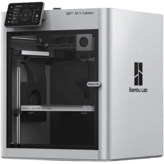
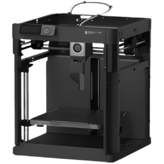
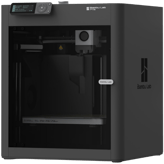
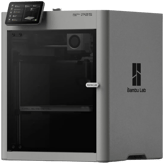
Flying Bear 3D Printer Reborn 3 Reviews: See Why 0 Shoppers Rated It 0 Stars!
Everyone’s got opinions. We collected 0 of them to see if the Flying Bear 3D Printer Reborn 3 3d printer really earns that 0/5 rating.
 Supermod
  Moderator
 Recaptor
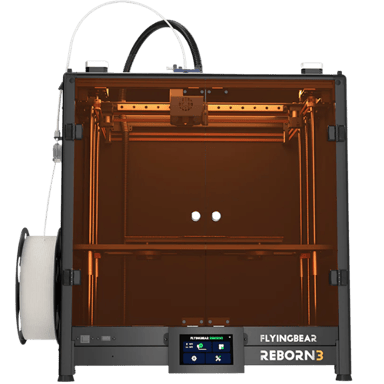
 Flying Bear 3D Printer Reborn 3 Review: A Powerful Choice for Consumer and Professional Applications
The Flying Bear 3D Printer Reborn 3 stands out in the crowded FDM 3D printer market, catering to both consumer and professional users seeking a balance between versatility and precision. Designed with intermediate to advanced users in mind, this printer aims to support a wide range of applications, from prototyping to engineering tasks. On paper, its combination of an impressive build volume, robust core features, and thoughtful hardware choices gives it a compelling edge that promises reliability and adaptability in various environments.
Detailed Specs & Features
Based on its engineering data, the Reborn 3 is a coreXY FDM printer with a build volume of 1647 cubic inches, translating to a sizable 11.81-inch cubic print area; generous enough for most professional tasks and large-scale consumer prints. Measuring roughly 21 inches wide and deep, and standing about 24.8 inches tall, the printer is compact enough for a workspace without demanding excessive room, with a space requirement of 6 square feet.
The machine operates on a 100-240 Volt internal power supply and draws up to 350 watts during heavy use, but idles efficiently at just 10 watts. While it lacks an explicit energy-saving mode, its low idle power consumption helps reduce unnecessary energy waste. The operating temperature range of 41 to 86°F and relatively wide humidity tolerance (20-60%) suggest flexibility for varying workshop conditions, backed by key safety certifications such as CE and RoHS.
The printer's core hardware features a CoreXY frame ensuring precise motion control via belt systems, and a closed enclosure that helps with temperature stability, though no active air filtration is included. Users will appreciate the 4.3-inch touchscreen display with 480x272p resolution for intuitive control, complemented by chamber lighting in white to monitor prints effectively.
The build plate combines PEI, magnetic, and spring sheet materials, offering a textured, removable surface that improves print adhesion and simplifies removal. Auto bed leveling, along with manual calibration options give flexibility in setup, while a first layer auto-calibration ensures consistent foundation quality.
Design & Build
In daily use, the Reborn 3's robust steel CoreXY frame offers excellent rigidity and motion accuracy, factors crucial for maintaining print precision over prolonged periods. The closed enclosure helps maintain a stable environment, particularly when printing temperature-sensitive materials like ABS. Although it lacks an air filtration system, the integrated lighting and spacious build area provide a professional feel. Its 54.13 lbs weight is substantial yet manageable, reflecting sturdy construction without excessive bulk.
Performance
Performance-wise, the printer shines with an official maximum print speed of 500 mm/s, although realistic conditions reduce this to about 250 mm/s, still competitive for an FDM model. A reported print success rate of 90% with recovered print capability after power loss underscores its reliability. Temperature capacities are impressive, with a max extruder temperature of 572°F and bed temperature up to 266°F, supporting a broad range of filaments including PLA, ABS, PETG, and TPU.
The inclusion of a direct drive extruder system and the option for quick-swap nozzles ranging from 0.2 mm to 1.0 mm adds versatility, though it only supports single-extruder printing. Its print quality is rated at 8 out of 10, reflecting high-resolution capabilities with layer heights between 50 and 300 microns. Moreover, features like a filament runout sensor and power-loss recovery enhance practical reliability for longer print jobs.
Connectivity & Software
Connectivity options are comprehensive, spanning USB, Wi-Fi, and LAN, and supported file formats include STL, OBJ, 3MF, and G-code, making integration with various slicer software straightforward. The printer supports remote monitoring and firmware updates, even remotely, which is a plus for professional setups with remote monitoring. Notably, it does not require proprietary software, allowing flexibility with third-party slicing tools, and it offers API/SDK integration to fit into more complex workflows.
Pros & Cons
Pros
- Robust CoreXY frame ensures high precision and stability.
- Wide extruder and bed temperature ranges support multiple filament types.
- Comprehensive connectivity with remote monitoring and firmware updates.
- Convenient auto and manual bed leveling plus removable build plate.
- Good energy efficiency with low idle power consumption.
Cons
- Lacks an energy-saving mode and an air filtration system.
- Supports only single extrusion with no multi-material printing.
- Requires filament drying before use; it has no auto-loading features.
- No built-in camera and lacks some advanced maintenance features.
Price & Value for Money
At a price of $449 at Alibaba.com, the Flying Bear Reborn 3 offers a strong value proposition. Given its one-year warranty and extensive power output specifications, this printer balances price with robust hardware and flexible connectivity. Buyers looking for an intermediate to advanced printer that supports a variety of consumer and professional-grade filaments will find it well-priced for the feature set. However, those requiring dual-extrusion or advanced energy-saving tech may want to consider other options.
Quick Take
In short, the Flying Bear 3D Printer Reborn 3 offers excellent build volume, reliable print quality, and versatile connectivity for under $500. If we look at the numbers alone, its solid construction and broad filament compatibility make it a formidable player in the mid-tier FDM category. While not perfect, it confidently delivers on core printing performance essentials.
Closing Recommendation
For users aiming to scale from hobbyist to professional-level printing, this model may be ideal due to its sturdy frame, precise temperature controls, and remote operation features. It appears to perform best for those needing large, consistent prints without complex multi-material requirements and who are willing to perform occasional manual maintenance. Overall, it helps users achieve dependable printing results with a fair balance of price and engineering quality.
Verdict
Rating: Based on the specifications and overall feature set, we believe Flying Bear 3D Printer Reborn 3 deserves 4.4 out of 5.
- Winner Feature => Robust CoreXY frame and extensive temperature support ensure versatile and stable printing.
- Needs Improvement => Lack of multi-material printing and energy-saving features reduces flexibility.
Reviews 0
The good, the bad, and the brutally honest.Average Rating

More 3D Printers 453
Unlock more awesome finds.